Lofthouse
Mining > Accidents & Disasters
Lofthouse Colliery and Disaster
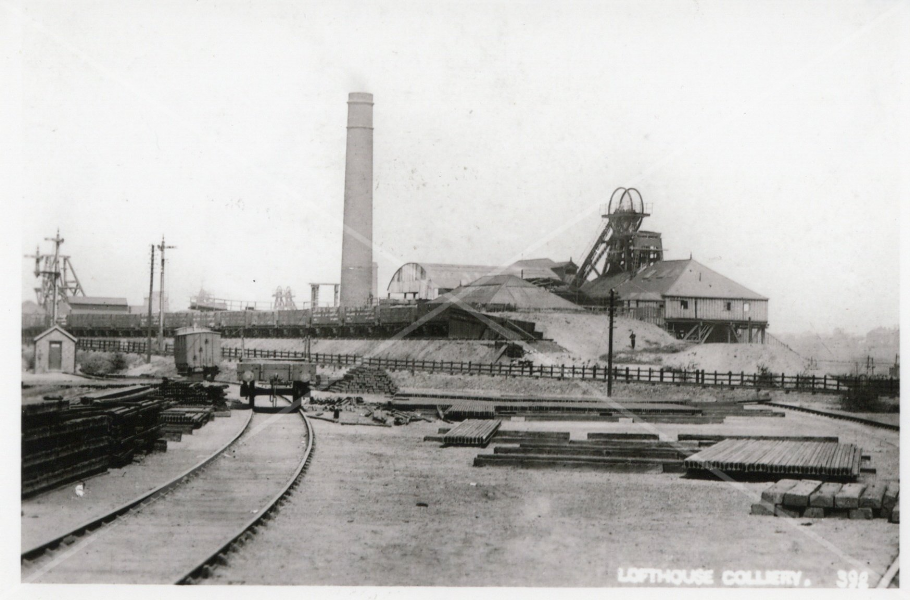
Lofthouse colliery first produced coal on the last day of 1877.
1,000men worked here by the turn of the twentieth century many from the nearby village of Outwood.
In March 1973 an inrush of water from nearby Kirkhamgate three miles southwest of the pithead killed seven miners.
The colliery closed in 1981.
The men who died were:
Frederick Armitage, 41
Colin Barnaby, 36
Frank Billingham, 48
Sydney Brown, 36
Charles Cotton, 49 (the only miner whose body was recovered)
Edward Finnegan, 40
Alan Haigh, 30
Lofthouse Colliery was in Lofthouse Gate, close to Outwood in the Stanley Urban
District, where many of the colliers lived. The village, to which the colliery
was adjacent, now falls within the Ardsley and Robin Hood ward of the City of
Leeds metropolitan borough but with a Wakefield postal address (WF3). A new
coalface was excavated too close to an abandoned flooded 19th-century
mineshaft.The sudden inrush of three million imperial
gallons (14,000 m3) of water trapped seven mine workers 750 feet
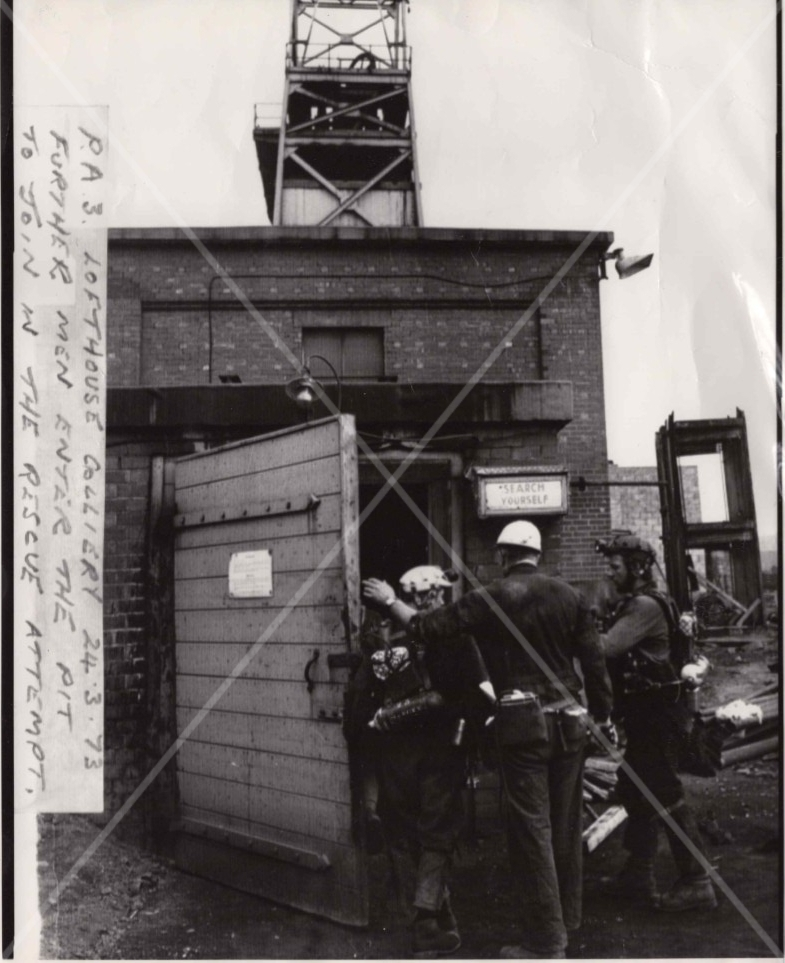
(230 m) below ground. A six-day rescue operation succeeded in
recovering only one body, that of Charles Cotton. The location of the flooded shaft was known
to National Coal Board (NCB) surveyors but they had not believed it to be as deep as the
modern workings. British Geological Survey records indicated that the flooded shaft did
descend to the same depth but the NCB neglected to check these records.
The incident led to the Mines (Precautions Against Inrushes)
Regulations 1979 (PAIR), requiring
examination
of records held by the Natural Environment Research Council which might be
relevant to proposed workings [and] diligent enquiry into other sources of
information which may be available, e.g. from geological memoirs, archives,
libraries and persons with knowledge of the area and its history.
The response of Arthur
Scargill, a compensation agent in the Yorkshire NUM, is credited with boosting his popularity
with the Yorkshire miners and helping his election to the post of president of
the Yorkshire Area NUM later in 1973. He accompanied the
rescue teams underground and was on site for six days with the relatives of the
seven deceased. At the enquiry he
used notebooks of underground working from the 19th century retrieved from the
Institute of Geological Sciences in Leeds to argue that the National Coal Board
could have prevented the disaster had they acted on the information available.
Lofthouse Colliery closed in 1981. Many of the miners took
transfers to the new Selby Coalfield.
(Wikipedia).
The following photographs show the aftermath and the devastation of the disaster.